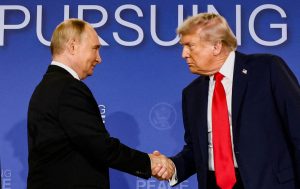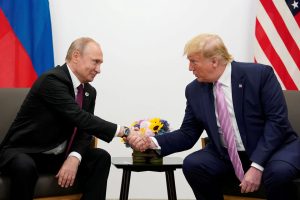
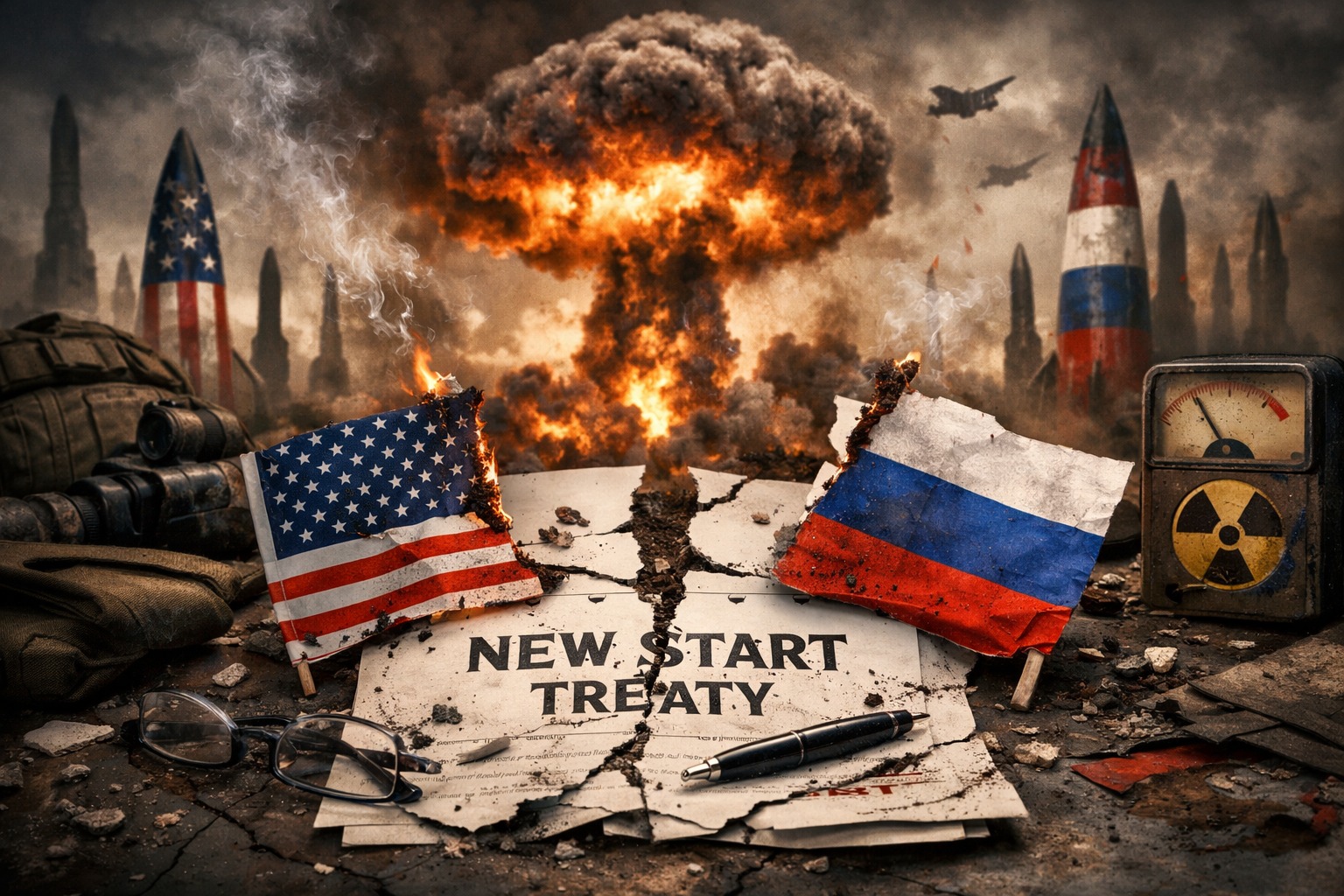


‘If it expires, it expires.’ The United States (US) President Donald Trump’s statement became true as the last guardrails on the world’s largest nuclear arsenals are gone. With the expiration of the New START treaty, the last legally binding limits on the US and Russian strategic nuclear arsenals have disappeared, leaving the global nuclear order increasingly defined by uncertainty and anxiety rather than restraint. The immediate consequence is not an automatic arms race, but the removal of constraints that had long shaped planning assumptions, reduced worst-case calculations, and dampened escalation incentives between the two largest nuclear powers.
New START’s principal value lay less in the numerical ceilings it imposed than in the predictability it created. By limiting deployed warheads and delivery systems and by institutionalising inspections and data exchanges, the treaty reduced ambiguity in a relationship otherwise characterised by deep mistrust. Its expiration forces both Washington and Moscow to plan for the possibility that the other will expand its arsenal rapidly, even if neither side initially intends to do so. This shift alone alters strategic behaviour, as military planners are compelled to hedge against scenarios that were previously constrained by treaty obligations.
The most destabilising consequence of this new environment is the renewed salience of Multiple Independently Targetable Re-entry Vehicles (MIRVs). The US removed MIRVs from its intercontinental ballistic missiles in 2014 in part to comply with New START and in part to enhance crisis stability, since single-warhead missiles reduce incentives for pre-emptive strikes. Without treaty limits, US planners are once again examining the feasibility of uploading additional warheads onto existing missiles. Russia, which never abandoned MIRVs, is structurally better positioned to exploit a post-treaty environment.
This asymmetry matters because MIRVs magnify first-strike incentives. A missile carrying multiple warheads becomes a high-value target, encouraging adversaries to strike early in a crisis rather than risk losing several warheads at once. Decision timelines compress, escalation risks increase, and the boundary between deterrence and war-fighting erodes. The resulting instability is qualitative as much as quantitative, driven by force structure rather than sheer numbers.
Beyond force posture, the disappearance of New START removes an important signalling and reassurance mechanism. Verification regimes and routine data exchanges helped contextualise military activity and reduced the risk that exercises, deployments, or rhetoric would be misinterpreted. In their absence, strategic signalling becomes louder and more ambiguous, increasing the likelihood of miscalculation. Russia’s declaration that it is prepared for a world without arms control reflects not confidence, but adaptation to a system in which restraint is no longer reciprocal or predictable.
The effects of this shift extend beyond the bilateral US-Russia relationship. The re-emergence of unconstrained competition between the two largest nuclear powers indirectly heightens Chinese threat perceptions, creating a classic security dilemma. Although China’s nuclear arsenal remains significantly smaller and its leadership continues to emphasise an independent nuclear posture, sustained US-Russia upload races and renewed emphasis on MIRVs and missile defence will inevitably shape Beijing’s strategic calculations. Over time, this development risks drawing China more deeply into a three-way nuclear dynamic it has historically sought to avoid, further complicating prospects for future arms control.
The psychological consequences of this erosion of restraint are as significant as the material ones. Nuclear anxiety, once managed through treaties and norms, now re-enters strategic planning as a central variable. The Bulletin of the Atomic Scientists’ decision to move the Doomsday Clock to 85 seconds to midnight reflects this cumulative degradation of stability rather than any single policy choice.
New START was never totally comprehensive; it excluded tactical nuclear weapons and emerging systems. Yet it preserved continuity in a relationship otherwise marked by conflict, demonstrating that existential risks could be managed even amid geopolitical hostility. Its expiration forecloses that stabilising function. Without a replacement framework, both sides are compelled to plan for the worst, accelerating dynamics that treaties were designed to contain. The world is not simply losing an agreement; it is losing a shared understanding of limits, and with it, a measure of strategic reassurance that took decades to build.