




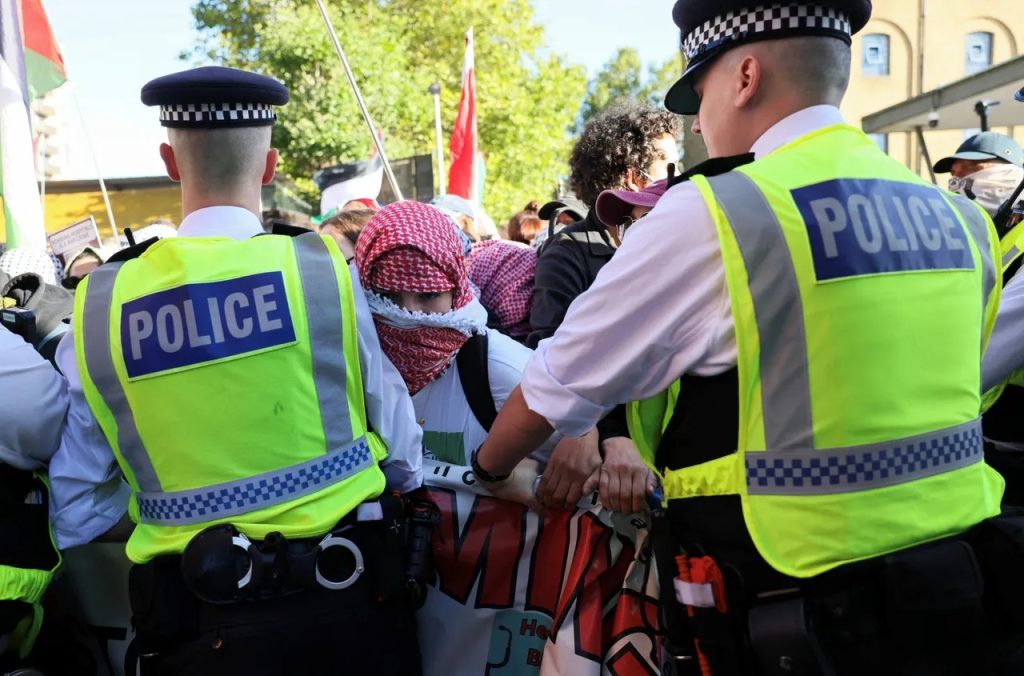
The UK police warning on arresting protesters who chant slogans such as ‘globalise the intifada’ reflects a troubling trend of conflating political expression with criminal intent, particularly when it comes to pro-Palestinian advocacy. While the Bondi Beach attack and other violent incidents are horrific and deserve unequivocal condemnation, using them to justify sweeping restrictions on protest language risks undermining civil liberties and disproportionately targeting one side of a deeply contested political debate.
From a pro-Palestinian perspective, slogans heard at demonstrations, however provocative or emotionally charged, are often expressions of anger, solidarity, and resistance against decades of occupation, displacement, and violence faced by Palestinians. They are not, in most cases, calls for violence against civilians. Even Britain’s own prosecutors have previously concluded that such phrases do not meet the legal threshold for incitement. Reframing them as criminal because ‘the context has changed’ introduces a dangerous elasticity into the law, where meaning is retroactively reshaped by unrelated acts of violence committed elsewhere.
This approach risks chilling free speech and narrowing the space for legitimate dissent, particularly among Muslim and Arab communities who already experience heightened surveillance and suspicion. It also sets a precedent where political slogans are policed not on the basis of clear intent or action, but on how they are perceived by authorities or external actors. In a democratic society, protest is meant to be uncomfortable and challenging; sanitizing it in the name of security weakens its purpose.
Moreover, the selective focus on pro-Palestinian rhetoric obscures the broader context of the Gaza war, where mass civilian casualties, collective punishment, and humanitarian catastrophe continue largely unchecked. Condemning antisemitism is essential, but it should not come at the expense of silencing criticism of Israeli state violence or delegitimizing Palestinian resistance as a whole.
Ultimately, protecting Jewish communities from hate and violence must go hand in hand with protecting the right to protest and speak out for Palestinian rights. Sacrificing one for the other risks deepening polarization and injustice rather than addressing their root causes.