


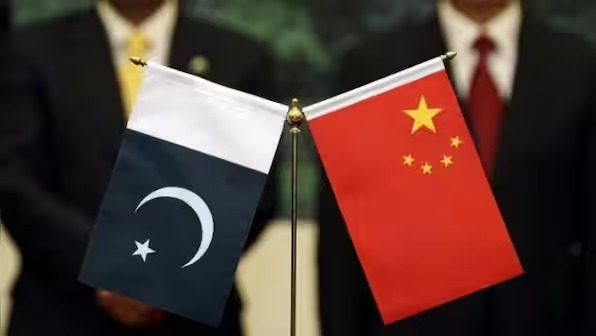
As Pakistan and China commemorate 75 years of diplomatic relations in 2026, both nations have found one of their most resilient and transformative expressions in the realm of civil nuclear partnership. Often overshadowed by high-profile projects like China-Pakistan Economic Corridor (CPEC), nuclear energy has emerged as the silent engine of Pakistan’s green energy transition. With the successful final acceptance of Karachi K-3 unit in April 2025 and rapid progress of the 1200 MW Chashma-5 (C-5) project, utilizing advanced Hualong (HPR1000) technology, the partnership has transitioned from simple technology transfer to sophisticated long-term strategic partnership, catering to socio-economic uplift.
Quiet Driver
China-Pakistan cooperation on the civilian use of nuclear power dates back to 1970s. Both states signed an agreement to share power reactor technology alongside nuclear-related support for uranium enrichment, following the termination of Canadian assistance. Soon after the agreement in the 1970s, China provided the domestically produced Qinshan-1 reactor to Pakistan to meet its energy needs. Subsequently, construction of Chashma Nuclear Power Plant-1 (C-1) started in the 1990s and was completed in 2021, with an output of 300 MW.
In June 2008, both states agreed to build Chashma-3 and Chashma-4, which have been inaugurated and have been operational since 2017 and 2018 respectively. Following this, work begun on K-2 and K-3 in 2015 and 2016, with K-2 joining the grid in 2021, followed by K-3 in 2022. While these plants came online, Pakistan’s original nuclear power plant, K-1, retired in August 2021 after 50 years of operation. The focus has now shifted to C-5. After signing the deal in 2023, the 1200 MW plant is expected to provide a massive boost to address Pakistan’s energy deficit.
The enduring partnership between Pakistan and China stands as a lesson in strategic resilience and South-South cooperation, providing a blueprint for energy security in the Global South. By stepping in when the global West faltered, China has not only validated Pakistan’s right to peaceful nuclear technology but also underpinned the nation’s transition towards a sustainable and robust energy generation portfolio. The progression from early-generation models to the large capacities of current projects reflects a flourishing alliance that supersedes transactional diplomacy, evolving into a cornerstone of national development.
Technological Sovereignty
In light of the 7th Strategic Dialogue between Pakistan and China, held in January 2026, the nuclear partnership stands as a rare global model for a non-NPT state maintaining adherence to International Atomic Energy Agency (IAEA) safeguards. The signing of the Country Programme Framework (CPF) 2026-2031 reinforced this credibility, demonstrating how a non-NPT state can pursue civil nuclear cooperation while remaining fully transparent under international oversight.
While other developments under CPEC are often subject to volatility arising from global commodity price fluctuations and infrastructure delays, nuclear cooperation remains a silent success story of the China-Pakistan bilateral relationship. Unlike fossil-fuel-dependent energy plants, which impose high economic costs and rely on imported fuel, projects such as C-5 offer decades of energy security and technological sovereignty. By indigenizing the maintenance and operational lifecycle of nuclear reactors, Pakistan is systematically reducing its reliance on unstable and conflict-prone foreign energy markets. This strategic shift away from the fossil fuels shields Pakistan’s economic growth from global supply shocks, resulting in a reliable baseload of power that underpins both strategic autonomy and long-term environmental sustainability.
Towards a Nuclear-Powered Future
The trajectory of bilateral nuclear cooperation suggests that the coming decades will be defined by high-quality development and increasing self-reliance. As the C-5 site matures and plans under the Nuclear Energy Vision 2050 advance, envisioning a nuclear-energy capacity of 40,000MW by 2050, the partnership continues to serve as the bedrock of Pakistan’s long term energy security. The grandfathered agreement of Chashma 1 & Chashma 2 has demonstrated notable resilience in the face of external pressures, successfully navigating the restrictions and roadblocks placed by the global nuclear trade regime. Both countries have adhered to international best practices and have not violated any of their international commitments. The exchanges remain transparent and strictly aligned with international norms and IAEA protocols, supported by robust safeguards to uphold non-proliferation principles.
Ultimately, this silent engine of cooperation is about more than megawatts; it reflects the dividends of high-technology industrialization, the development of a specialized workforce, and the pursuit of sustainable long-term energy security. As Pakistan navigates the complexities of the twenty-first-century energy landscape, Chinese nuclear expertise will remain a central pillar of Pakistan’s nuclear energy calculus. By cementing this partnership, Pakistan is not only securing its energy needs but also ensuring that its industrial and economic growth is powered by a reliable and indigenous-led energy mix capable of withstanding volatility in global energy markets, unlike fossil-fuel-dependent alternatives.
To conclude, the partnership between Pakistan and China in the civil nuclear sector has evolved into a silent engine of growth, offering a stable, low-carbon alternative to the region’s traditional reliance on volatile fossil fuels. By transitioning from the aging KANUPP-1 to advance Hualong-1 reactors, including K-2 and K-3, this cooperation has moved beyond energy generation to become a comprehensive blueprint for South Asian energy security. It demonstrates how long-term strategic investment and technology transfer can build a self-sustaining industrial base, providing a predictable and resilient power supply essential for economic modernization. For a region grappling with chronic energy shortages alongside escalating climate change pressures, the Pakistan-China model serves as a proof that nuclear energy, when backed by robust and reliable bilateral frameworks, can provide the sovereign, high-output foundation required for sustained regional prosperity.