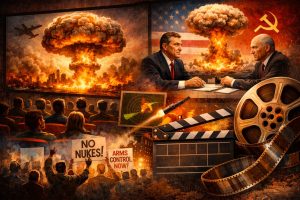



The United States (US) and Russia have agreed to restore high-level military-to-military communication following the expiration of the New START treaty, the last remaining agreement limiting the two countries’ strategic nuclear arsenals. The announcement came just hours after the treaty formally lapsed, removing legally binding caps on deployed nuclear warheads, missiles and launchers for the first time in over a decade.
Moscow confirmed that it no longer considers itself constrained by New START limits, though Russian officials signalled continued openness to dialogue. Behind-the-scenes negotiations reportedly took place in Abu Dhabi, where both sides explored ways to preserve key transparency and verification mechanisms associated with the treaty, even in the absence of a formal extension.
The Pentagon said the decision to resume military dialogue — suspended since 2021 amid rising tensions and the Ukraine war — followed what it described as constructive progress during parallel peace-related discussions in the United Arab Emirates. The talks involved President Donald Trump’s special envoy, Steve Witkoff, and senior adviser Jared Kushner, suggesting direct access to the White House and a willingness to manage escalation risks.
According to US European Command, renewed communication channels are intended to reduce miscalculation, enhance transparency and support strategic stability at a time of heightened global uncertainty. The collapse of New START has raised fears of a renewed arms race, particularly as both sides modernise their nuclear forces and deploy advanced delivery systems.
President Trump has previously advocated a broader arms control framework that would include China, but Beijing has consistently rejected participation in a trilateral arrangement, arguing that its nuclear arsenal remains far smaller than those of Washington and Moscow. This has complicated efforts to replace the expired treaty with a comprehensive successor.
The United Nations has expressed serious concern over the treaty’s demise. Secretary-General Antonio Guterres warned that declining transparency and the erosion of arms control norms have significantly increased the risk of nuclear confrontation, calling the current moment the most dangerous in decades.
While the resumption of military dialogue may help contain immediate risks, the absence of binding limits underscores the fragility of the global nuclear order and the growing challenge of sustaining arms control in an increasingly multipolar world.