
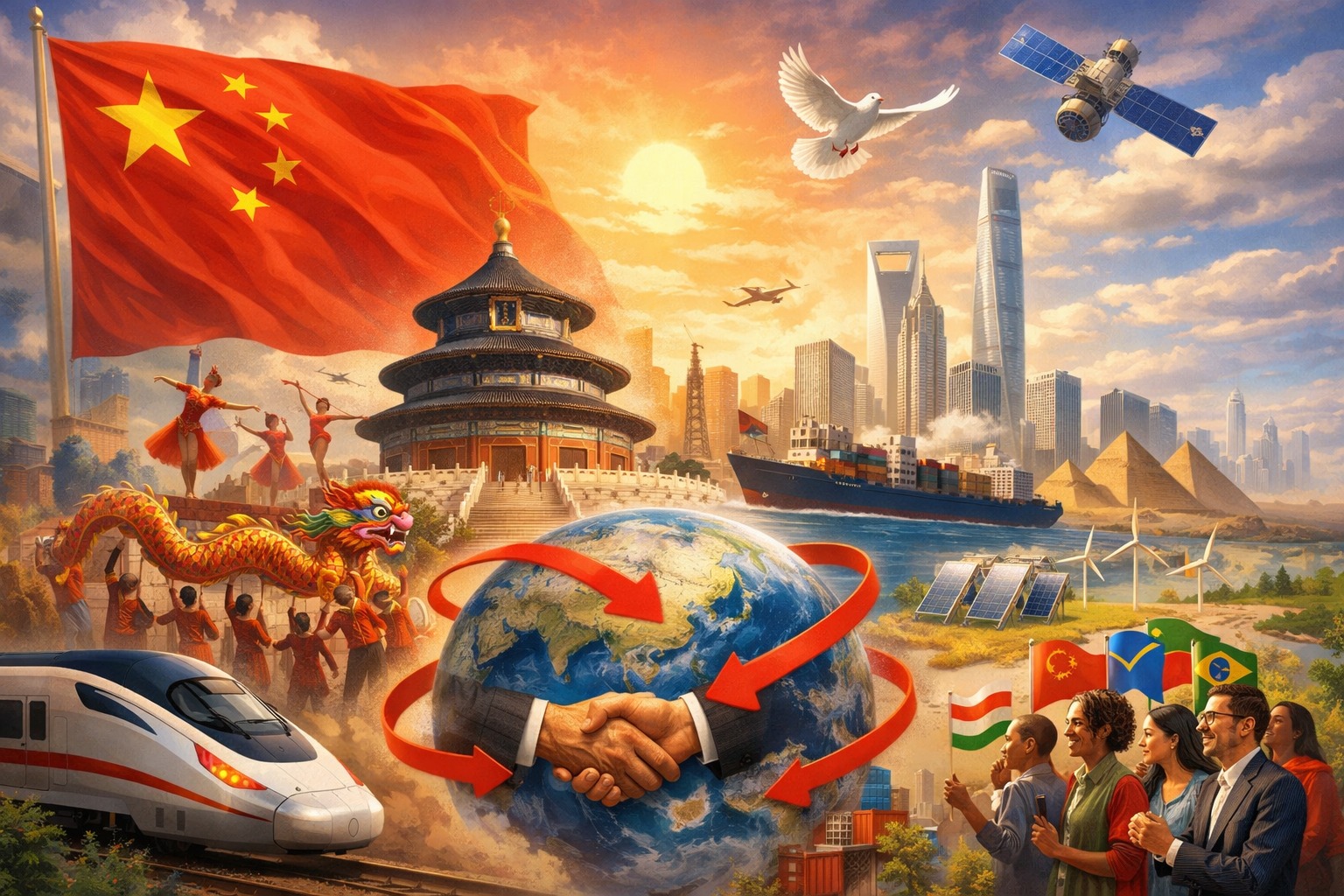


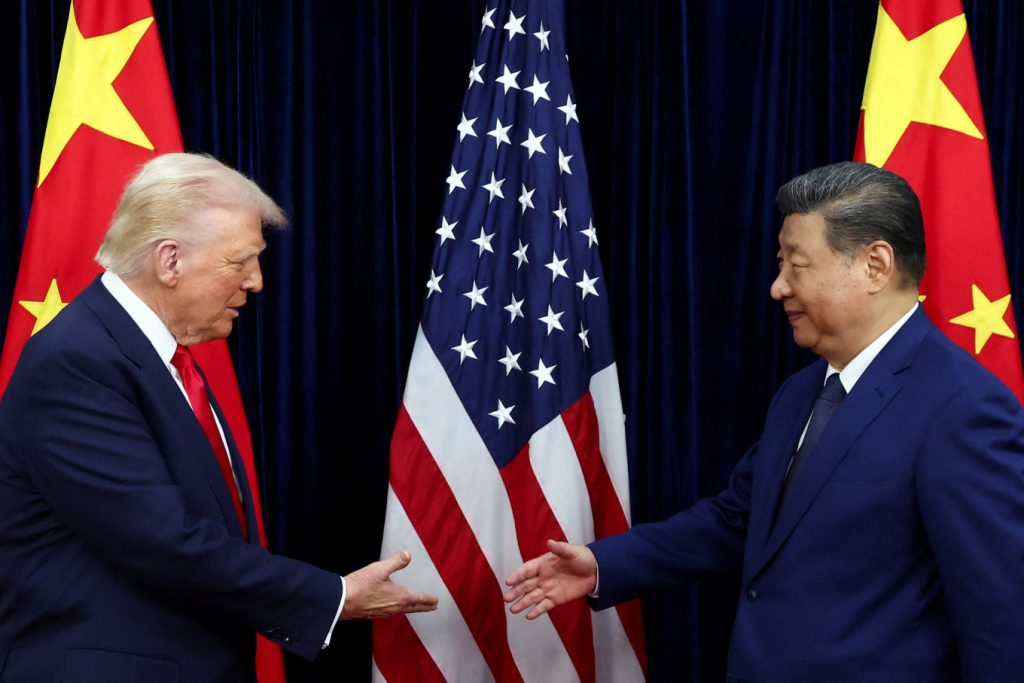
On 3 September 2025, to commemorate the end of World War II, China hosted an unprecedented parade displaying its military and economic might. The event confirmed that the contemporary era would be marked by great-power competition between China and the United States (US). In my earlier opinion article, I highlighted major elements of Chinese strategy, including moral, economic, geographic, military, and technological dimensions. The US responded by releasing its National Security Strategy (NSS) to address new realities of the contemporary geopolitical landscape. The NSS outlines geoeconomic and geopolitical elements aimed at containing China’s rise.
Since the end of World War II, the policies of US administrations have revolved around building a liberal world order, global policing, and sporadic involvement in Asia. However, the current strategy considers these policies unnecessary and a major cause of Washington’s economic decline. Accordingly, it delinks global aspirations from national security. So, the NSS urges the allies to share the burden of their security, pursue balanced trade with the US, and refrain from free riding. Through these steps, Washington seeks to strengthen alliance cohesiveness, revive its economy, and secure technological leadership, thereby enhancing competitiveness and achieving a calibrated force posture that protects its interests.
One of the striking elements of Chinese strategy is its emphasis on moral values inspired by Confucianism. To audiences in the Global South, Beijing presents itself as a model of peaceful growth, moral authority, and non-interference. In response to Western interventionism and sanctions, China rejects the role of a hegemon. On the other hand, Washington has traditionally emphasised democracy and human rights, but its current strategy places greater focus on mutual collaboration, economic opportunities, and sovereignty. The NSS underscores a crucial link between economic stability and national security through its aim to revitalise domestic industry and maintain technological leadership, thereby sending a clear message to both allies and the public.
Another significant element of China’s strategy is its modernised armed forces, which increase Beijing’s presence throughout the First Island Chain. During the recent parade, Beijing displayed weapons systems that complete its nuclear triad. Washington considers the likelihood of Beijing’s aggressiveness in the Asia-Pacific to have increased. Consequently, the US adopted a denial-oriented policy without resorting to direct conflict. The current strategy focuses on enhancing defences of allies, such as Taiwan, maintaining a favourable balance in conventional forces, aimed at ensuring freedom of travel in the First Island Chain. Washington approved the sale of high-end weapons worth $11 billion, including HIMARS rocket systems, anti-tank missiles, and drones.. The purpose of this strategy is to deter China and maintain strategic stability in the Asia-Pacific region.
Likewise, the Chinese strategy also involves access and control of critical maritime chokepoints. By acquiring shares and building infrastructure, Beijing enhances its economic leverage and its freedom to patrol the South China Sea. In addition to labelling China’s economic model as a debt trap, Washington is promoting naval cooperation with allies, such as Japan, South Korea, and Australia. Simultaneously, the new strategy urges US partners to play an active role in safeguarding their sovereignty and economic opportunities. For Washington, keeping sea lines of communication open and ensuring freedom of navigation are top priorities. In this regard, the US intelligence community will closely monitor critical supply areas to effectively respond and mitigate perceived threats.
The rivalry between the US and China is increasingly playing out in the techno-economic sphere. Rare earth minerals are indispensable to defense and modern technological development, including semiconductor chips and electric batteries. Beijing’s monopoly over rare earth minerals and its secured supply chains make the US and its allies strategically vulnerable. Notably, the US is completely dependent on imports for 12 critical minerals and more than 50% dependent on another 28, while Africa remains home to vast deposits of cobalt, lithium, copper, manganese, and rare earths. Accordingly, the NSS explicitly identifies Africa as a key region of interest for the US. It emphasises the formation of stable trade relationships, rather than aid, to promote economic growth.
China is one of the largest export markets for US goods and services (second only to Mexico), and the US is the top export market for China. This trade has brought lower prices to US consumers and higher profits for US corporations. However, it also entails costs, notably the loss of American jobs due to import competition, automation, and multinational companies moving manufacturing overseas. The NSS discusses the need to balance economic relations with China. It underlines the importance of cooperation between allied countries to prevent job losses and establish secure supply chains.
Overall, the NSS spearheads an overarching strategy in the great power competition with China. It establishes a denial posture that involves increasing economic, technological, and military might to deal with threats around the world. It breaks from ineffective past US policies and prioritises economic interests in guiding policy actions. The current US strategy acknowledges that countering China requires strong allies that participate equally to secure their interests, alongside a robust economy, a capable military, and sustained technological supremacy.