

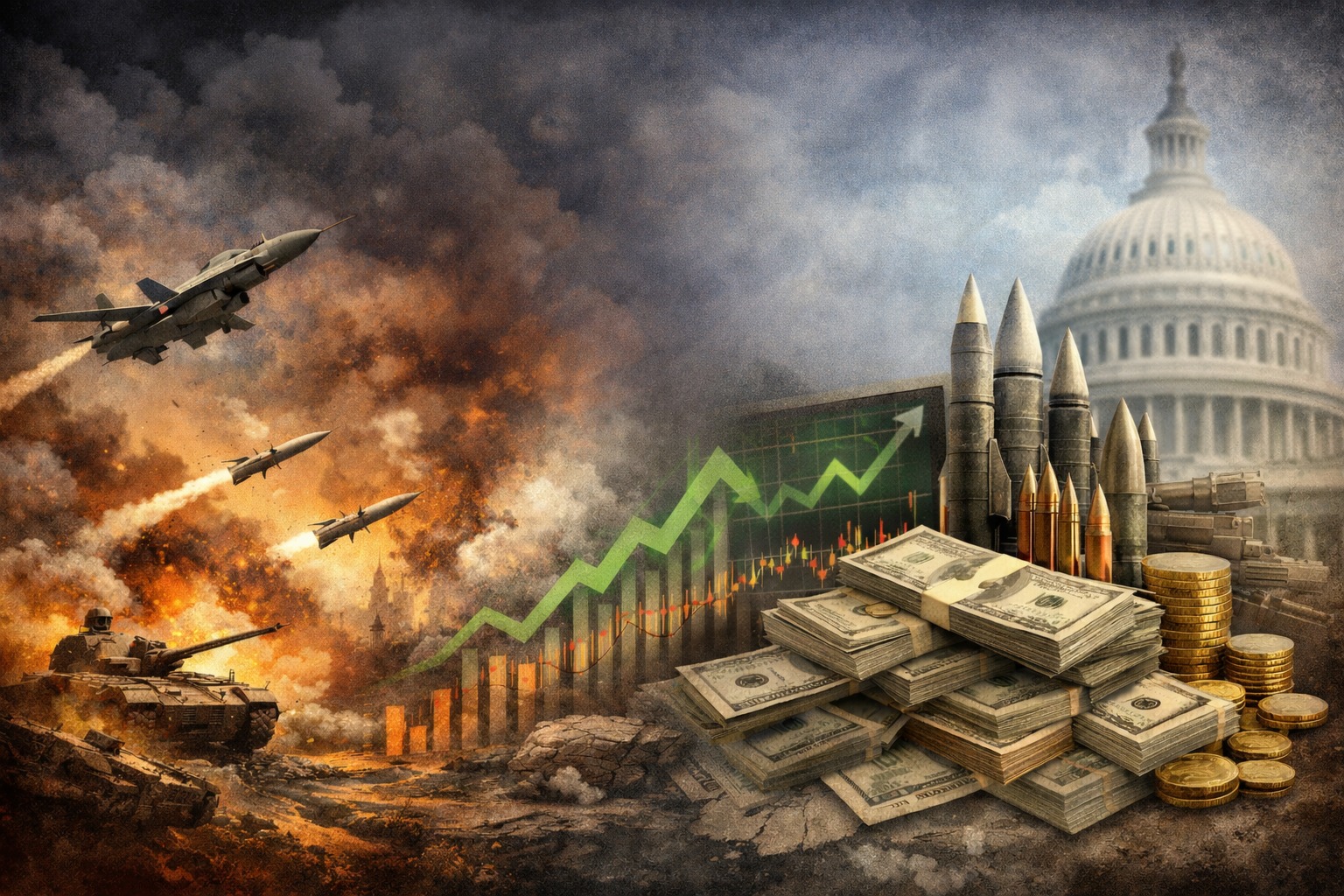


Political will is the foundational requirement for effective arms control. It requires prioritizing long-term safety over short-term military advantages or economic benefits from weapons production. However, the growing market value, economic structure, arms sales to allies, and lobbying efforts by weapons-producing companies strain political will for arms control. These factors enhance the utility of the arms industry by generating revenue, creating jobs, and fostering innovation. As the former United States (US) President Dwight D. Eisenhower, who first warned of the military-industrial complex, said, “We must guard against the acquisition of unwarranted influence. The potential for the disastrous rise of misplaced power exists and will persist.” A recent analysis by Bloomberg found that more than a dozen people with ties to Peter Thiel – a military tech magnate – have been inducted into the Trump administration. This rising influence and subsequent win-win situation for workers and the economy deplete the political will required for arms control.
While conflicts strain public arsenals, they simultaneously deliver fresh revenue to the firms that manufacture the world’s most advanced weapons systems. For instance, during 2020-24, which saw the US withdrawal from Afghanistan, the arms industry received contracts worth $ 2.4 trillion. Private firms have also profited enormously from the surge in foreign arms sales tied to the wars in Ukraine and Gaza. Against this backdrop, on February 28, the US and Israel launched Operation Epic Fury against Iran. The operation reportedly involved air strikes, sea-launched cruise missiles, and coordinated attacks on Iran. The war, now in its 6th week, has renewed demand for high-end weapon systems, thereby enhancing the stock values of major US weapons producers. The resulting market reward for weapons companies could weaken the will of concerned countries to pursue arms control.
The economic structure of the defense sector differs markedly from most other industries. Demand is not shaped by consumer choice or market saturation, but by government policy and geopolitical threat perceptions. Besides making weapons for defense and allies, these companies provide jobs, conduct R&D, and earn profit. Following the attack on Iran, a meeting at the White House was attended by the chief executives of the largest arms-producing companies, who promised to increase weapons production and expedite delivery. For example, Anduril Industries plans to open a drone production plant in Ohio, creating jobs for 4,000 people in the coming years. So, the defense sector creates economic and political incentives that protect its existence and utility.
Iran’s launch of Operation True Promise against Israel and the US military bases in the Gulf countries allowed the defence establishment to sell weapons to the US military and allies. Tehran utilised drones and missiles to hit US bases and Israeli cities effectively. The US Department of State approved a $16.5bn arms deal for the United Arab Emirates (UAE), Kuwait, and Jordan. Likewise, the State Department announced the emergency sale of weapons worth $151.8 million to Israel. As Tehran continues to be resilient and make the US-Israel objective of defeating Iran unlikely, these sales would help produce more weapons, continue the war, and increase regional instability.
The war is depleting US stockpiles, which require more orders to fulfil long-term demand, leading to rising stockpiles for defence companies. For instance, Lockheed Martin’s stock value (which produces THAAD interceptors) has hiked by nearly 40% since 2026. Likewise, Boeing (F-15 fighter jets), Northrop Grumman (B-2 stealth bombers), and RTX (Patriot Radar) experienced increases of 1%, 6%, and 4.7%, respectively. Rising stock values indicate that these companies have bright prospects, either through large government contracts or an increased defence budget. For example, the Pentagon has asked the White House to approve a more than $200 billion request to Congress to fund the war in Iran. Further, the capitalist market will attract institutional investments, such as BlackRock, which has invested in defence stocks. Consequently, it creates a self-reinforcing economic and political dynamics that make defence companies a lucrative choice for growth.
Treaties such as the Arms Trade Treaty regulate the international trade in conventional arms and seek to prevent and eradicate illicit trade and diversion of conventional arms. Since the 1990s, it has been the first arms control treaty signed by an overwhelming majority of the United Nations members. It is based on the state’s discretion and political will and has no strict international governing rules. The prevention of diversion of conventional arms is one of the stated objectives of the Arms Trade Treaty. However, in the era of globalisation, technology inevitably spreads and eventually becomes available to potential adversaries. The biggest reason is the availability of knowledge, including technical data, engineering designs, blueprints, diagrams, etc. There is an agreement that weapons diffuse faster; however, their tactical, operational, and habitual adaptation takes time. According to one estimate, since 2019, US arms have been used in 28 conflicts by one or more parties. Besides, the illegal and black market, weapons systems can spread through arms sales, commercial development of dual-use technologies, or imitation. Globalization has transformed the arms trade into a complex, networked industry with internalized production, affecting arms control.
To conclude, the US-Israel war against Iran has increased the supply and demand of high-end weapons. Subsequently, the stocks of major weapon-producing companies have increased, reflecting the future utility and need for weapons. Arms control treaties, especially the Arms Trade Treaty, largely rest on transparency and discretion. Their effective implementation requires coordinated efforts and political will. The current supply-demand cycle of weapons can strain the political will for arms control, putting the future of arms control in jeopardy.