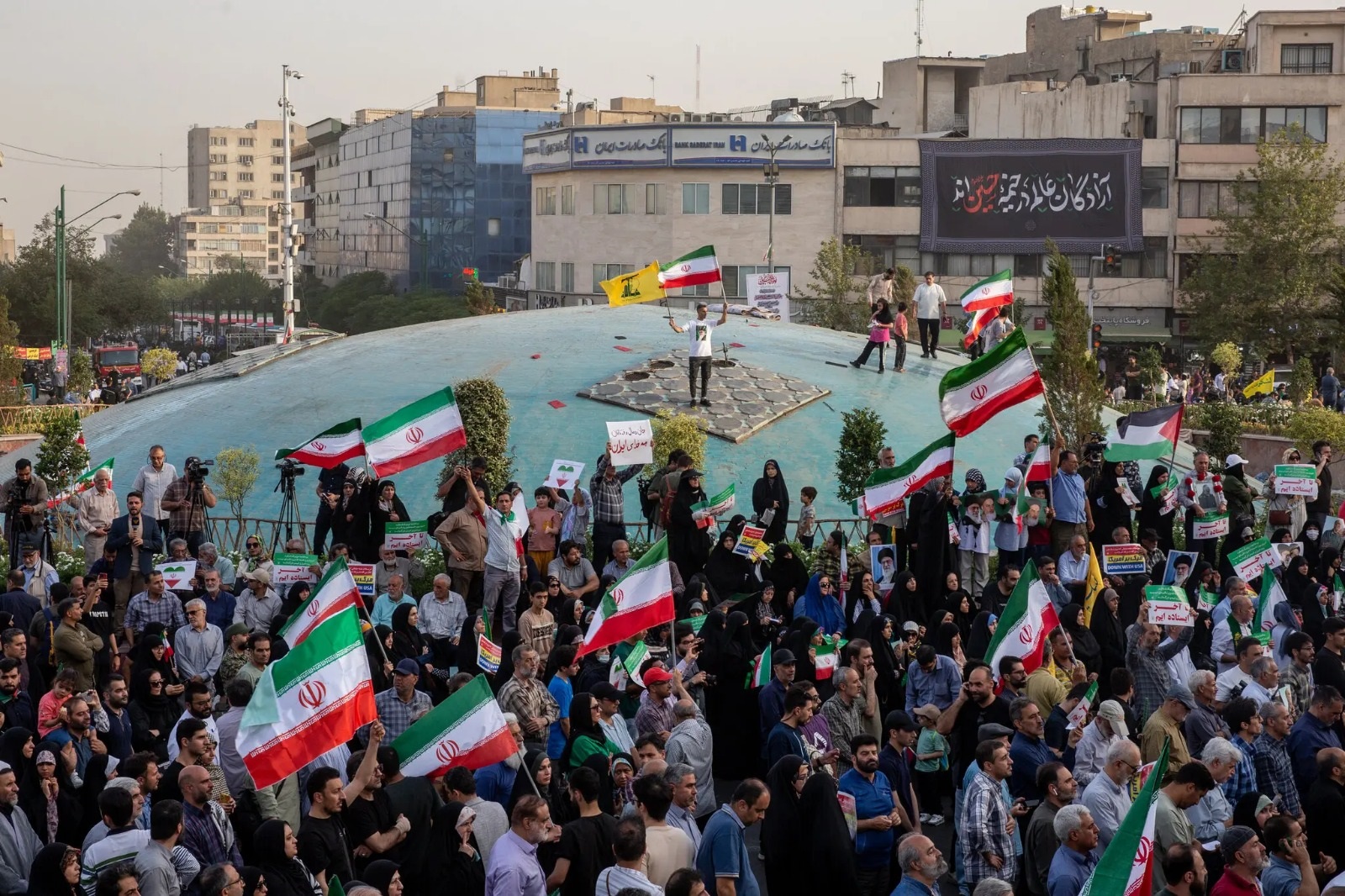


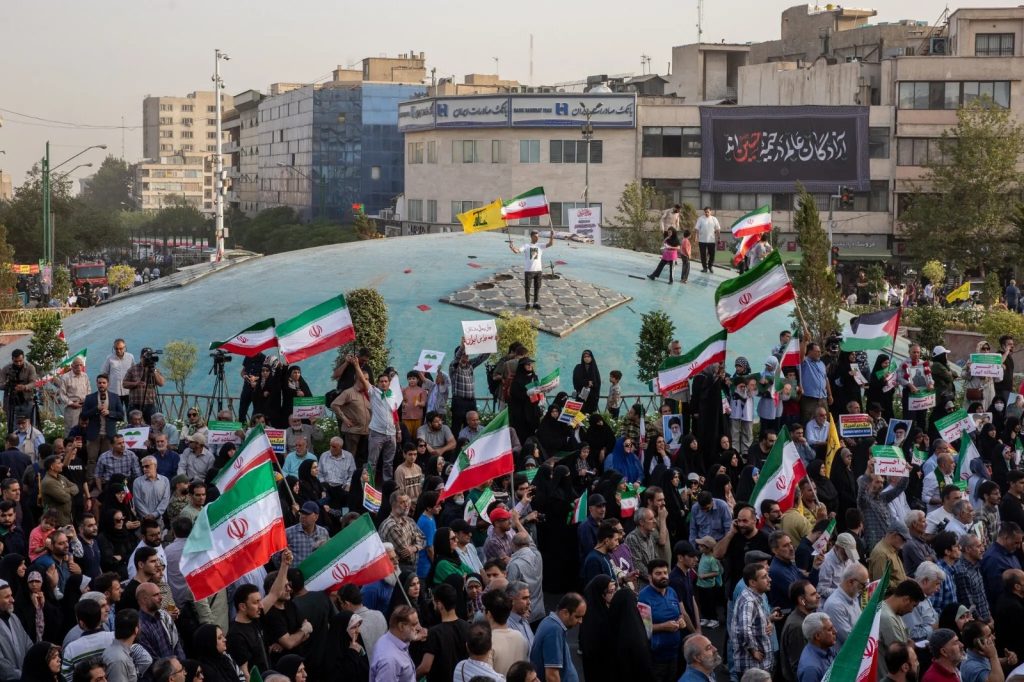
On February 28, unprovoked joint United States-Israeli strikes on Iran left a rattled Middle East, killing Iranian Supreme Leader Ayatollah Ali Khamenei and other senior government and military officials. The war campaign, known as Operation Shield of Judah and Operation Epic Fury in Israel and the US respectively, has sparked retaliatory strikes from Tehran, heightening fears of a broader regional conflict. As the conflict rages on, the debate over the legality of the joint US-Israeli actions under the United Nations (UN) Charter has become the talk of the town.
Israeli President Issac Herzog claimed that the rationale for bombing Iran was that Tehran was building a nuclear bomb. Israeli Defence Minister Israel Katz termed the strikes ‘preemptive’ aimed at curbing any future threat to the State of Israel from Iran. The US Defense Secretary Pete Hegseth defended the military campaign, while the US Ambassador to the UN Mike Waltz said the US actions were lawful and necessary to ensure ‘global security’.
The legality of preemptive strikes, however, remains a controversial and highly debated issue under international law. Preemptive strikes mean that a nation resorts to military action on the belief that an attack is imminent and all other diplomatic means have failed to reach a peaceful resolution of the conflict. Under the UN Charter’s Article 2(4), member states are prohibited from using or threatening force against the territorial integrity or political independence of any other member state.
There are, however, exceptions to this rule. The use of force becomes legal only if either the UN Security Council authorizes it or it is exercised in self-defense under Article 51 of the UN Charter. The latter right is only activated when an armed attack occurs against a UN member state. The Caroline Doctrine, an important principle in international law, sets parameters for a state using self-defense before an attack actually happens. It states self-defense can only be justified if there is (1) Necessity, (2) Immediacy, and (3) Proportionality. In modern international law, this doctrine has influenced interpretations of Article 51 of the UN Charter.
In the case of Iran, none of these prerequisites for the lawful use of force were met. The attacks came at a time when the US and Iranian officials were engaged in talks, with the US President Donald Trump indicating that he would give more time to bilateral negotiations. The US Director of National Intelligence Tulsi Gabbard testified in March last year that Iran was not pursuing nuclear weapons. In June last year, the head of the International Atomic Energy Agency (IAEA) Rafael Grossi said that evidence gathered on Iran’s nuclear program by the IAEA could not make a ‘basis of any military action.’ Moreover, President Trump claimed during the 12-day war with Iran last year that he had ‘obliterated’ the nuclear capabilities of Iran, making any such claim of an imminent threat untenable. As the latest round of US-Iran talks were underway, meaning all diplomatic means had not been satisfied before the attack, the use of force cannot be justified under international law.
The UN Secretary-General António Guterres told the UN Security Council that the strikes violated international law, including the UN Charter. In Washington, many Democrats have declared the strikes illegal, arguing that only Congress has the power to declare war. Washington’s major allies in the North Atlantic Treaty Organization (NATO) have also questioned the legal grounds for US-Israeli strikes on Iran. French President Emmanuel Macron said the strikes were conducted ‘outside international law’ and his country ‘cannot approve of them’. Spanish Prime Minister Pedro Sánchez publicly declared the war illegal and unjustified, barring US military planes from using Spanish airbases to attack Iran. British Prime Minister Sir Keir Starmer initially refused to join the joint US-Israeli strikes on Iran, questioning their legality and stating that diplomacy was the best way forward, but the United Kingdom (UK) later allowed the US to use British bases for ‘defensive’ strikes. Now this decision is also controversial under international law. Philippe Sands, a law professor at the University College London, says that if the UK provides defensive support in relation to a force which is explicitly illegal, alluding to the joint US-Israeli strikes on Iran, it would make it difficult to distinguish between an offensive and defensive use of force.
As the US and Israel explicitly declare a forceful ‘regime change’ as their endgame in Iran, a sovereign state and member of the UN, the implications could reverberate across the world. On the one hand, it sets a dangerous precedent that undermines the role of international law in future conflicts; on the other, it has serious humanitarian as well as economic repercussions, particularly for global energy security. The latest reports indicate that even the Trump administration has begun to ‘panic over’ oil price hikes resulting from the closure of the Strait of Hormuz by Iran. David Crane, an eminent American expert on international law, warns these actions normalize ‘unilateral force as a tool of foreign policy.’ To materialize this agenda, the strikes killed senior Iranian civilian and military officials, including their Supreme Leader Ayatollah Ali Khamenei. Marko Milanovic, a law professor at the University of Reading, says assassinating the head of any state clearly violates international law. Marieke de Hoon, an associate professor of international criminal law at the University of Amsterdam, says any regime change operation clearly violates the sovereignty of another state and the joint US-Israeli strikes on Iran amount to a ‘crime of aggression.’
The timing of the strikes is particularly significant. The attack took place against the backdrop of Israeli Prime Minister Netanyahu facing a serious corruption trial at home, with his opponents calling him an ‘enemy of the state’. In fact, President Trump has repeatedly urged the Israeli president to pardon Netanyahu. Professor Harold Hongju Koh, who served as a legal advisor to the State Department during the Obama administration, stated that President Trump violated both US law and the UN Charter through these strikes, making an attempt to distract media attention from the Epstein files and a recent Supreme Court ruling invalidating many of the tariffs imposed by President Trump.
The US, however, appears to lack a coherent so-called post-regime-change strategy should Iran’s current Islamic government collapse, a prospect that multiple analyses consider unlikely. If past US interventions in Afghanistan, Iraq, and Libya are any guide, prolonged wars tend to result in greater destruction, chaos, and strategic miscalculation in the region.
The only way to end the Middle East crisis is a return to international law and diplomacy. Though the US Senate has recently blocked a resolution to curb President Trump’s unprovoked military campaign against Iran, other global powers and regional players, however, should continue to push for an immediate ceasefire and protection of the civilian population and infrastructure. Unfortunately, the global condemnation of the aggression has been ineffective, therefore, as Professor Samuel Moyn has suggested, a broader antiwar movement is needed to set in motion a process that ultimately leads to the end of the conflict.