


The newly released US National Security Strategy (NSS) places former President Donald Trump at the centre of a sweeping narrative of global peacemaking, a portrayal that demands careful scrutiny. While the document celebrates him as a ‘President of Peace’ who allegedly brokered settlements in eight international conflicts, these sweeping claims appear intended more to build a political legacy than to reflect verifiable diplomatic outcomes. Several of the cited ‘peace deals,’ including those between Pakistan and India, Israel and Iran, or Egypt and Ethiopia, lack independent confirmation or contradict known regional realities.
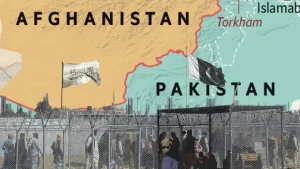
The NSS also amplifies Trump’s repeated, and highly contested, assertions about the number of aircraft downed during the May Pakistan-India conflict. By echoing his inflated figures, the document inadvertently reinforces Pakistan’s narrative while deepening India’s objections. Instead of providing an objective assessment of a sensitive crisis, the strategy risks politicising South Asian security dynamics for domestic gain.
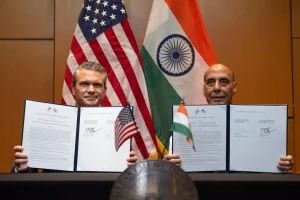
Far more consequential is the NSS’s framing of China as America’s central strategic challenge. The document reaffirms Washington’s intent to deepen its alignment with India across economic, technological, and security domains, positioning New Delhi as a key partner in countering Beijing. This approach, however, raises questions about whether US-India convergence is being pursued as a matter of regional stability or as part of a broader effort to securitise Asia.
Equally troubling are the document’s domestic and ideological undertones. Its language on immigration, accusing unnamed actors of manipulating demographics, and its praise for ‘patriotic European parties’ echo right-wing populist narratives rather than grounded strategic analysis. The NSS links migration to ‘civilisational erasure,’ a framing that risks normalising exclusionary politics within mainstream policymaking.
On the global stage, the strategy’s treatment of the Middle East and Europe leans heavily on political messaging, particularly in overstating US-brokered progress and downplaying ongoing conflicts. Overall, the NSS reads less like a sober strategic blueprint and more like an attempt to codify a political worldview under the banner of national security.