


Quiet diplomacy has already begun in Europe, reassessing the US reliability in providing extended nuclear deterrence to its allies, often away from the US scrutiny. The Trump administration’s National Security Strategy clearly emphasizes the pressure on Europe to “stand on its own feet,” which is an unexpected setback to Europe’s immediate defensive needs. To bear the burden of US’ precipitous retrenchment from European security, particularly amid the Ukraine war, European allies are pursuing a joint European security architecture, advocated particularly by France, Germany, and others. This process has begun within the conventional weapons domain, for instance through the European Long-Range Strike Approach, and might later be extended to develop into an independent nuclear umbrella for Europe.
This marks a critical step in Europe’s strategic autonomy, signaling a willingness among allies to reduce their dependency on US security guarantees. European policymakers appear increasingly aware that unilateral US actions, including military retrenchment and shifts in strategic focus, necessitate proactive and independent regional security measures.
Similar developments can be witnessed in the Pacific, where Japan and South Korea are exploring options for layered security with the European states as well as China, amid increasingly perceived threats from North Korea and China. With China, despite offensive signaling over Taiwan, the countries are simultaneously negotiating some form of an East Asian security framework. South Korea’s nuclear powered submarine deal with the US might serve as a balancing strategy to deter North Korea, but for South Korea, it is a step toward exploring latent nuclear options. These developments indicate that regional powers, including European allies, are actively recalibrating their security postures in response to the perceived unpredictability of US commitments.
Even Trump’s hasty Ukraine peace deal is a European nightmare, as it exclusively prioritizes the US’ political standing in any multilateral emerging order, thereby compromising European security and giving Putin an advantage. While it is understood that the US aims to end the long Ukraine war and focus on its competition with China in the Pacific and, increasingly, Latin America, Europe perceives this as a hasty withdrawal from US from commitments to European security. If the US ends the Ukraine war in this manner, Putin would likely refocus on the European threat that resurfaced during the conflict. The cumulative effect of these developments has heightened the perception in Europe that US policy may prioritize strategic interests elsewhere at the expense of alliance security obligations.
Contemporarily, the US faces a dual challenge: deterring its rivals while addressing the growing tendency of its allies to decouple. The motivation behind the US call for the resumption of nuclear testing may not have stemmed from any confirmed technical failure of its arsenal, as the subcritical experimentation, laboratory testing, and advanced simulation have continued unabated. The argument for nuclear testing was also raised during Trump’s first term. Congressional archives cite press accounts of May 2020 suggesting that nuclear testing could strengthen the US negotiating position in talks with other nuclear great powers; however, such a move could also serve as a pretext for others to resume nuclear testing.
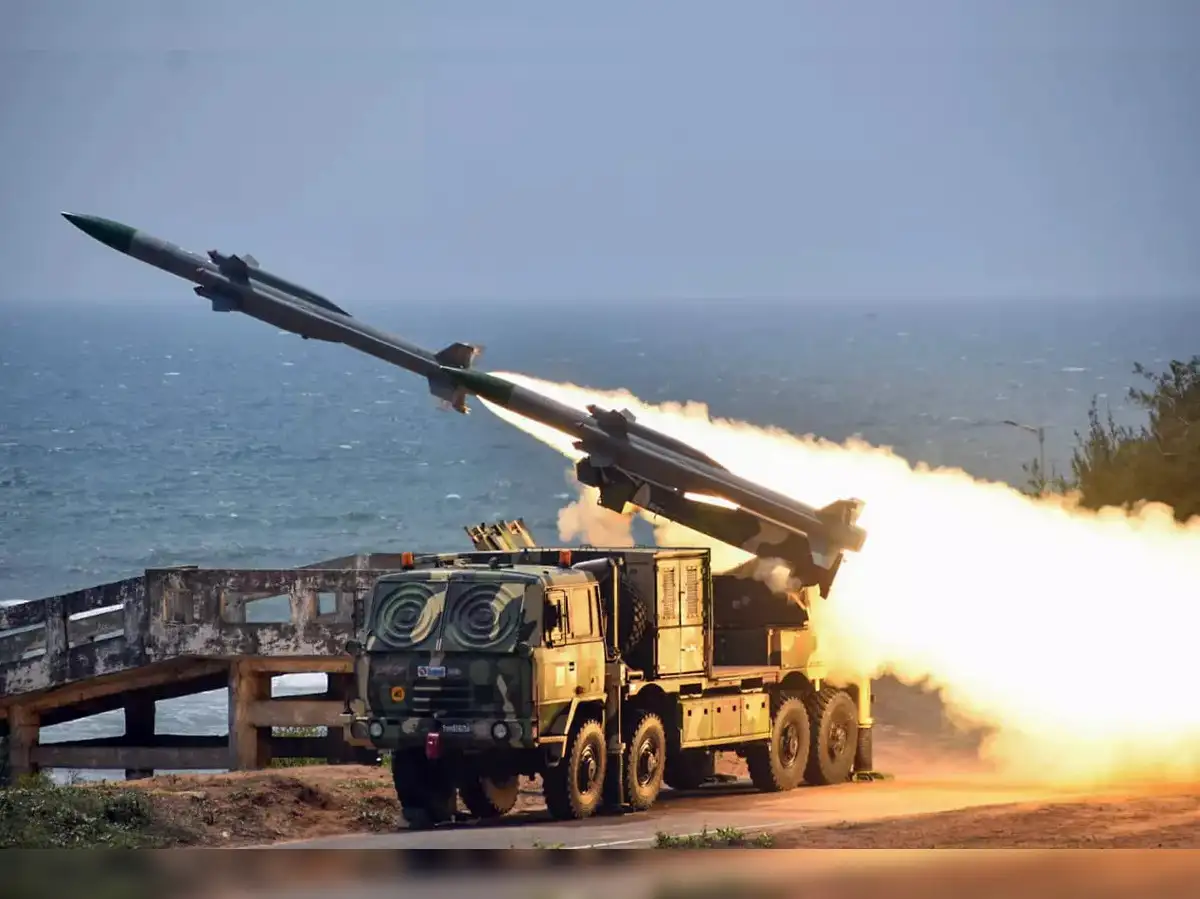
Notably, the argument suggests that even non-nuclear weapon states may initiate nuclear weapons programs. These states include several US allies, such as Japan, South Korea, Australia, European states and even the Kingdom of Saudi Arabia. In this context, the US advocacy for nuclear testing can also be interpreted as an effort to lay the groundwork for a future trilateral future arms control regime involving Russia and China, particularly as the current deadlock over New Start appears increasingly deliberate and aimed at incorporating China into the arrangement. Advanced missile systems are of equal concern to the US as nuclear arsenals, further complicating the arms control landscape.
Accordingly, the US support for resuming nuclear testing is more likely intended to serve a dual purpose. First, it seeks to compel rivals to enter arms control negotiations on US terms. Second, these measures simultaneously reinforce the US’s position as the dominant nuclear power globally, asserting strategic primacy, maintaining a clear edge over potential rivals, and bolstering trust and prestige among its allies.
The fragmentation of deterrence and the reassessment of nuclear hedging strategies among US allies reflect a structural realization of an emerging multipolar order. In this environment, allies are increasingly seeking recalibrated security architectures through greater regional autonomy by selective disengagement from US-centered alliance frameworks. The cumulative effect of these trends may be the emergence of analogous nuclear postures and heightened signaling behaviour intended to restore deterrence stability
This dynamic underscores Europe’s growing strategic wariness toward the US-led alliance guarantees and its exploration of alternative deterrence arrangements, even as it seeks to preserve alliance cohesion where necessary. Collectively, these developments illustrate the strain in US-European relations, wherein Europe’s pursuit of strategic autonomy appears as a response to perceived US retrenchment and to broader recalibrations of European security within an emerging multipolar international order. Ultimately, this reflects a growing recognition that sustaining influence requires not only military capabilities, but also credible long-term commitments and alignment of strategic priorities among allied states.